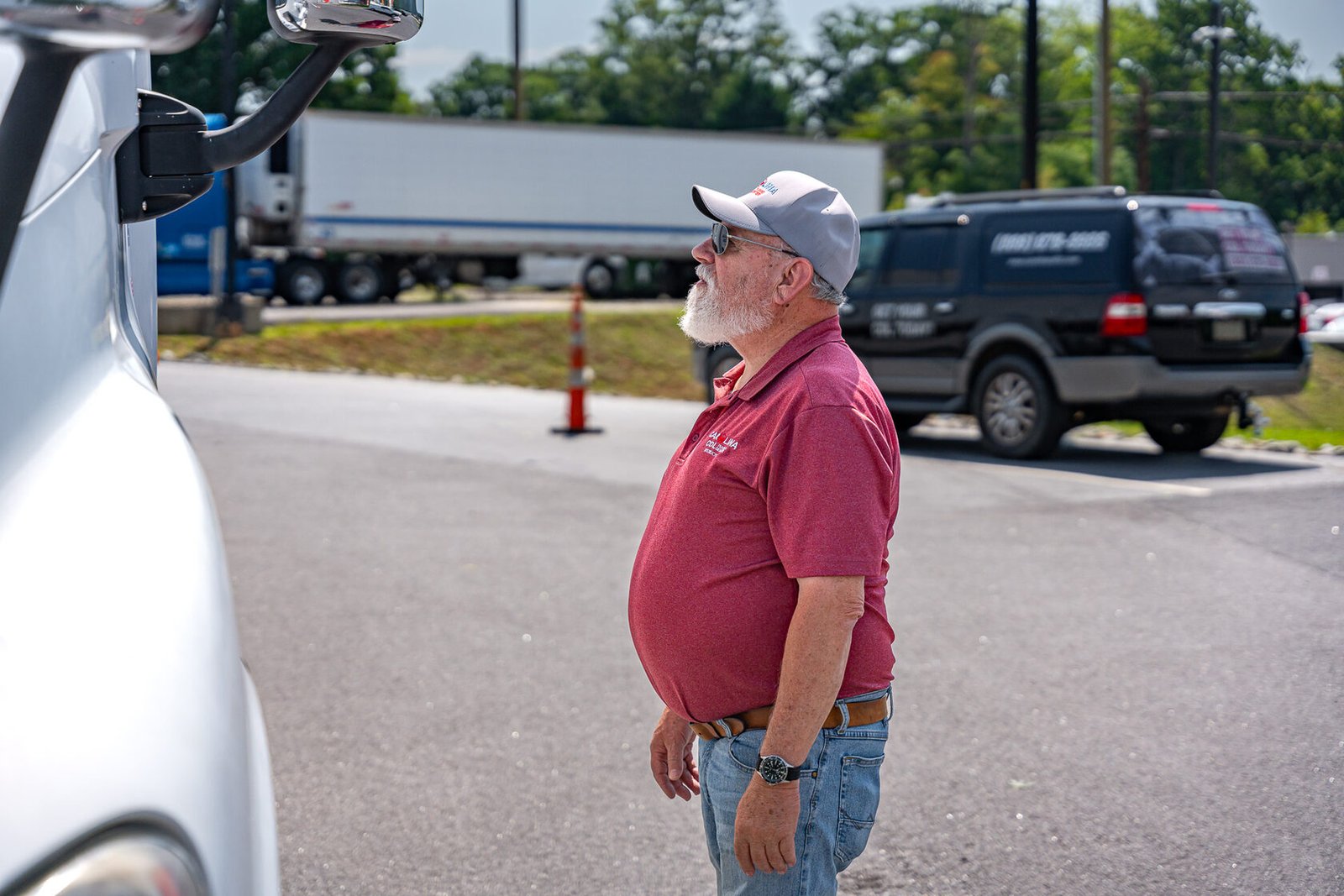
Starting something new as an adult takes guts, especially when that something is a 70-foot tractor-trailer. Plenty of our students sit in their car in the parking lot on day one, a little nervous, wondering if they can really do this. They can, and so can you. Our program at Carolina CDL Training Center in Candler, just outside Asheville, is built for people with zero truck experience. We teach from the ground up, in small groups, with patient instructors and real equipment. Nobody expects you to already know anything.
The program runs 160 hours over about four weeks, with classes Monday through Thursday, 8:00am to 6:30pm. Those days are full, but they are also paced so the skills build on each other. You will not be thrown into highway traffic on your first morning. Here is how it all comes together.
Three kinds of training that build on each other
Your weeks are split across three settings. Each one prepares you for the next, so by the time you reach the harder parts you already have the basics under your belt.
1. Classroom (the theory)
You start where it is safe to learn, in the classroom. This is the foundation, and it is where everyone begins on equal footing. You will cover:
- The rules of the road and safe driving practices
- How the truck and its systems actually work
- Pre-trip inspection knowledge, so you know what to check before you ever roll
- Hours of service, the rules that govern a driver's day
- The full ELDT theory curriculum that federal law requires
The classroom also preps you for your written permit tests. If you want to understand why this part matters, our guide to ELDT explains the entry-level driver training rules in plain language.
2. Range (the yard)
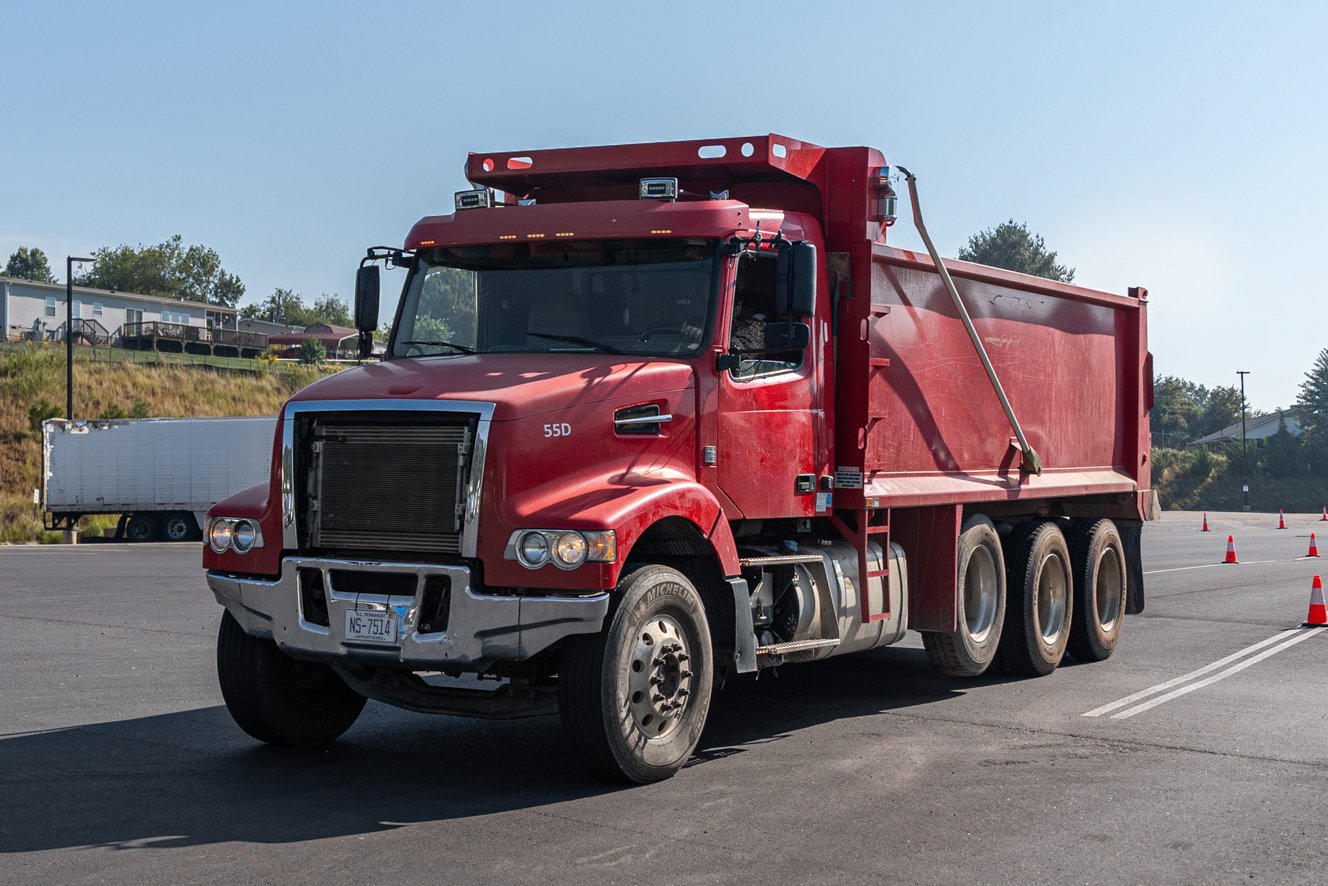
Next you move to the range, a closed cone course where there is no traffic and no pressure. This is hands-on time with the truck, learning to control it at low speed until it stops feeling foreign. You will practice straight-line backing, offset backing, alley dock, and tight turning. Backing a long trailer feels impossible the first time you try it. By the third week it feels routine. That shift happens to every single student, and watching it click is one of the best parts of the job for our instructors.
3. Road (behind the wheel)
Once the truck feels manageable in the yard, you head out onto real roads in real traffic. You build up gradually to highway speed, practice merging, and learn to handle the curves and grades of Western North Carolina. On a manual truck you will learn to shift smoothly. Your instructor is right there with you the whole time, calm and coaching, not waiting for you to make a mistake.
How the weeks flow
You do not have to keep track of all this yourself, but it helps to see the shape of it:
- Early on: classroom and permit prep, getting comfortable with the theory and earning your Commercial Learner's Permit.
- Middle stretch: the range, where you drill the backing maneuvers and low-speed control until they feel natural.
- Later weeks: more and more time on the road, putting real miles behind you.
- The finish: focused test prep before your skills test.
What to bring and how to show up
You do not need much, and you do not need to be in great shape or mechanically gifted. Come ready with:
- Your Commercial Learner's Permit (CLP) once you have earned it
- Comfortable clothes and sturdy, closed-toe work boots
- Your DOT physical completed
- A willingness to learn and to ask questions
That last one matters most. The students who do well are not the ones who arrive knowing everything. They are the ones who show up, listen, and keep trying. Feeling nervous the first time you climb into the cab is normal. Everyone feels it. It fades fast.
Finishing strong
Your training ends with the 3-part skills test: the pre-trip inspection, basic control skills, and the road test. By then you will have practiced every piece of it many times over. When you pass, your ELDT completion is reported to the federal registry automatically, so you do not have to chase any paperwork. And because driving school is really about getting to work, we help connect you with job opportunities through our placement partner. To see the full path from start to license, read how to get your CDL in North Carolina.
The bottom line
CDL training is structured so a complete beginner can succeed, one step at a time, with people beside you who want you to make it. If you are ready to take the first step, see how to enroll, compare a Class A license with our Class B option, or just reach out. Fill out our quick form on the contact page or call us at (888) 878-9986, and we will walk you through it.