When Hurricane Helene tore through Western North Carolina in late September 2024, it changed the region. Roads washed out, bridges dropped into rivers, and whole communities were cut off. The human toll was heavy, and the recovery is still very much underway. But out of that hard work comes something worth understanding if you live here and are thinking about a trucking career: the rebuild needs drivers, and it will for years.
A rebuild measured in years, not months
The numbers tell the story. Statewide, Helene caused damage estimated near $60 billion. In response, NCDOT launched what it has called its largest-ever transportation reconstruction program - roughly $5 billion to repair and rebuild roads and bridges across about 9,400 damaged sites. Of those, thousands need full reconstruction, including hundreds of bridges and culverts. A separate program covers thousands more private roads and bridges, and housing rebuilds across the mountains are only partway done.
The point isn't the exact figures, which the state keeps revising as more damage is assessed. The point is the timeline: the heaviest construction is scheduled across 2026 and 2027 and stretches beyond. This is not a quick cleanup. It's a sustained, funded, multi-year effort.
Why a rebuild means trucking work
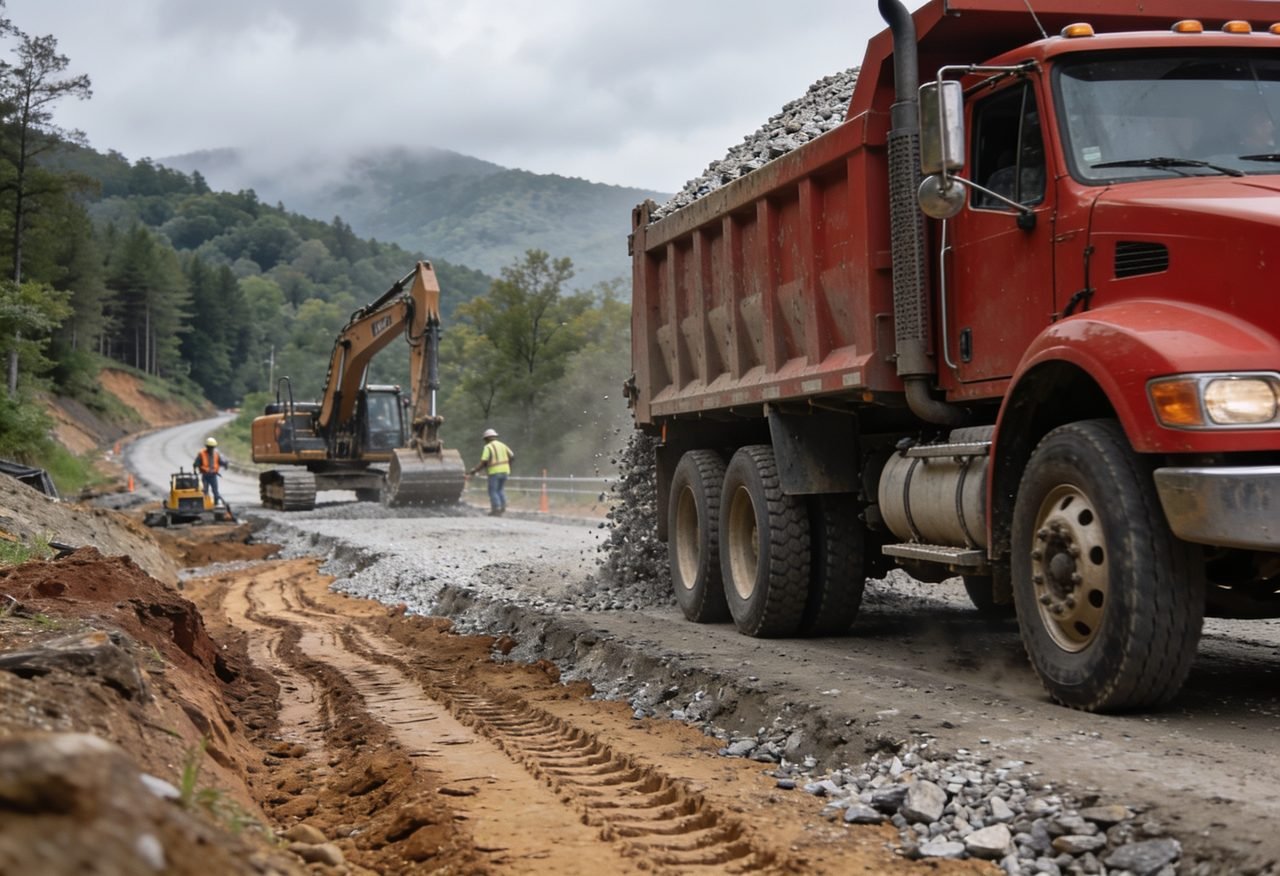
Construction moves on wheels. Every road cut, bridge, culvert, and new home turns into truckloads of material going in and debris coming out:
- Aggregate, stone, and fill dirt hauled to grade roads and rebuild foundations.
- Concrete and asphalt delivered to paving and bridge crews.
- Debris and demolition material hauled away from cleared sites.
- Equipment, pipe, and building supplies moved between yards, suppliers, and job sites.
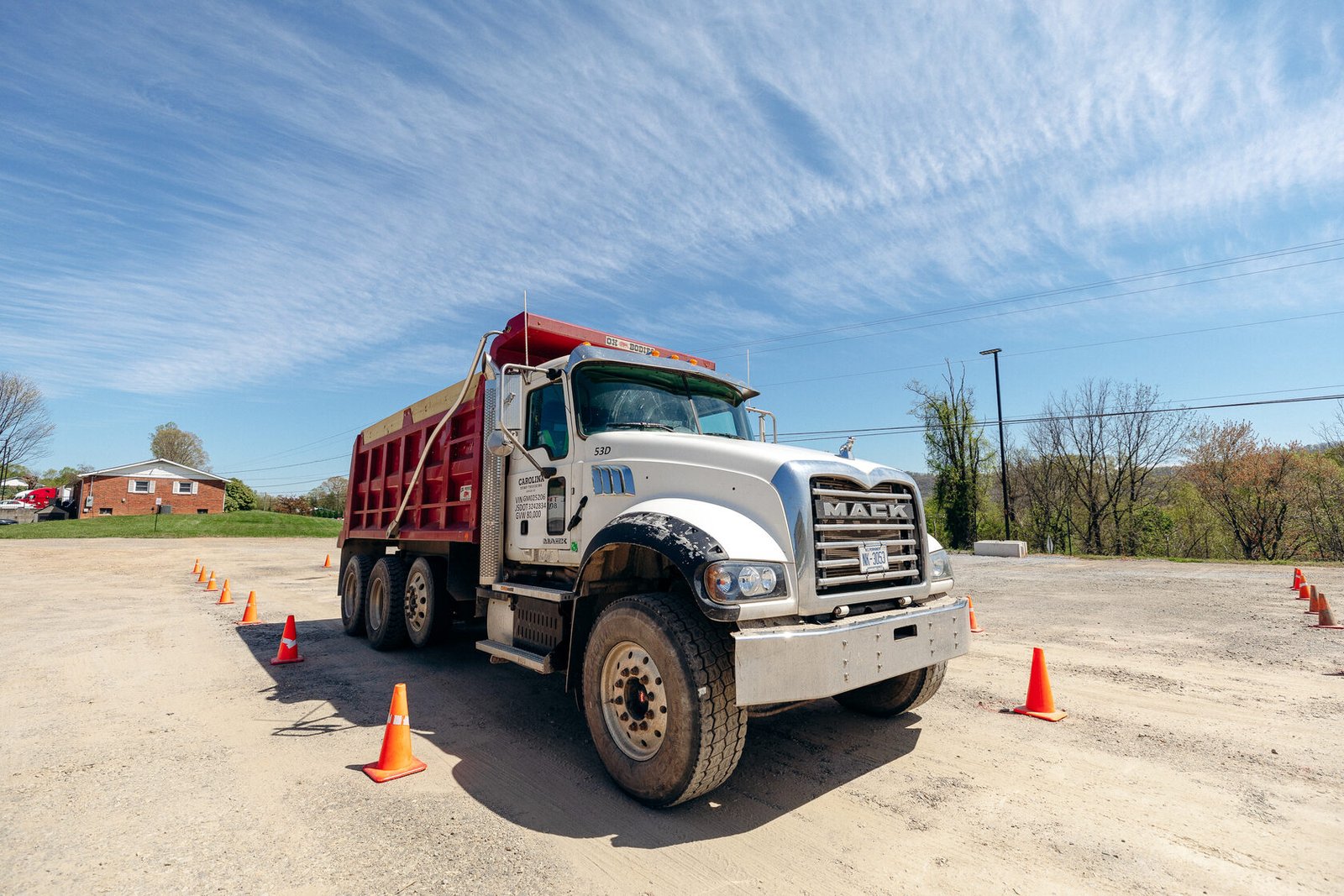
That work is done by local drivers - dump trucks, end dumps, and materials haulers running day routes, not cross-country trips. It's the kind of driving where you're home at night and working in the communities you actually live in.
Steady work that doesn't ride the freight cycle
Long-haul freight goes up and down with the national economy. Construction and materials hauling tied to a funded rebuild is far steadier - the money is committed and the work is scheduled. For a new driver, that's a real advantage: instead of betting on the freight market, you're stepping into demand that's already on the books for the next several years, right here in Western NC.
It's also the kind of work automation isn't coming for. Self-driving trucks that exist today run on mapped interstate highways in flat, dry states. Tight job sites, mountain roads, and the constant judgment a construction haul requires keep this firmly a human job for the foreseeable future. (We dig into that more in our piece on self-driving trucks and your career.)
Getting in on it
To run a dump truck or haul materials for construction, you'll generally want a Class B CDL for straight trucks, or a Class A if you want the widest range of equipment, including tractor-trailer end dumps and lowboys. Class B takes two weeks with us and Class A about four, and we'll help you figure out which fits the work you want.
Because Carolina CDL Training Center sits right here in Candler, near Asheville, we know the local employers and the kind of driving this region runs on. When you finish, we help connect you with real job opportunities through our placement partner - so your training points straight at the work that's happening in your own backyard.
The bottom line
The recovery of Western North Carolina is a hard chapter, but it's also a moment when skilled local drivers are genuinely needed - and that need will hold for years. If you've thought about earning a CDL and staying close to home, the timing here is about as good as it gets. See the Class B program, compare it with Class A vs. Class B, or read more about trucking jobs in Western NC.
Ready to be part of the rebuild? Apply today or call (888) 878-9986 and our team will walk you through getting started.