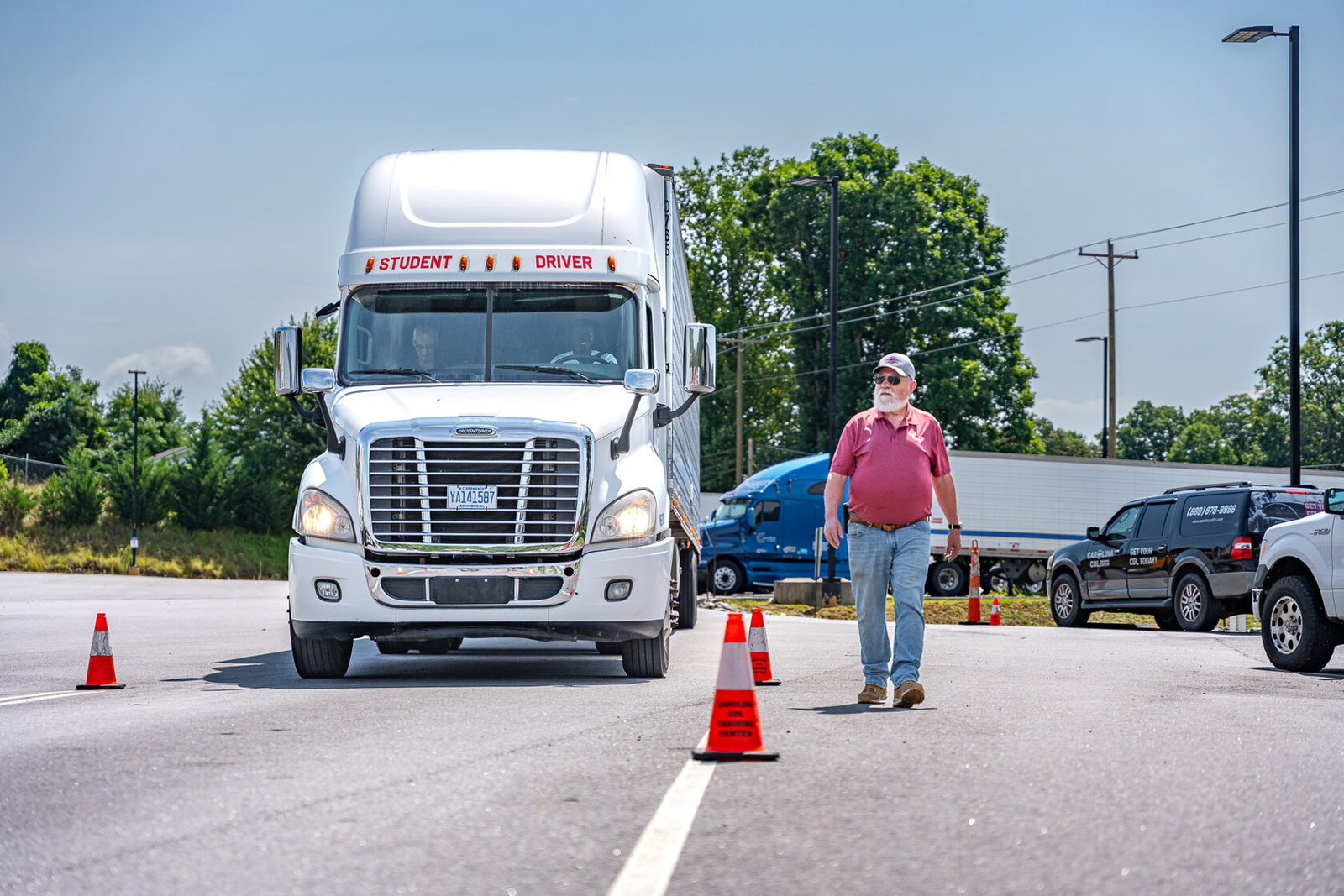
If you've watched a news clip about a truck driving itself down the highway and wondered whether it's worth getting a CDL at all, you're not alone. It's one of the most common questions we hear. The honest answer: the technology is real, but it's much narrower than the headlines suggest, and the kind of driving most new drivers actually do is the last thing it will touch.
Where driverless trucks actually are in 2026
The progress is genuine. In 2025, Aurora launched the first commercial driverless heavy-truck runs in Texas, starting between Dallas and Houston and later adding longer routes toward El Paso. Other companies, like Kodiak, are running driverless trucks in places like the West Texas oil fields. By early 2026 these operators had logged hundreds of thousands of driverless miles and are working to scale up their small fleets.
But look closely at where and how this happens, because it matters:
- Mapped interstate highways only. These trucks run fixed, carefully mapped freeway routes - not back roads, job sites, or city streets.
- Warm, dry, flat states. Texas and the Southwest, not snow, ice, or mountains.
- Long-haul middle-mile only. The simple, straight, high-mileage part of a trip between hubs.
That's a tiny slice of all the trucking that happens in America, and it's the easiest slice to automate. Everything harder is still firmly a human job.
The model isn't "no drivers" - it's "drivers do the hard part"
The realistic future most experts describe is hub-and-spoke: an automated truck might handle the boring highway stretch between two hubs, while human drivers handle everything around it - getting in and out of cities, backing into tight docks, the first and last miles, and all the vocational work that doesn't happen on a freeway at all. In that model, automation actually creates local and regional driving jobs even as it changes long-haul.
And the timeline for the harder work is long. Independent researchers generally talk about 15 to 20 years before regional and local routes feel any real effect - and mountain driving, construction sites, and bad-weather routes may stay human well beyond that. The roads around Western North Carolina are a perfect example of what these systems can't do.
What this means for a new Western NC driver
The work our graduates step into is the work automation reaches last, if at all:
- Local and dedicated routes - home daily, in and around your own community.
- Dump trucks and construction hauling - tight sites, changing conditions, constant judgment.
- Regional and specialized freight - flatbed, tanker, and the kind of hands-on hauling a computer can't load or secure.
- Mountain and bad-weather driving - exactly the conditions current self-driving systems avoid.
None of that is going away because a truck drove itself down a Texas freeway. If anything, the demand for skilled local drivers in places like Western NC is growing right now.
The honest bottom line
Will trucking look different in twenty years? Almost certainly - every industry will. But starting a CDL career in 2026 is not betting against the future. It's stepping into a field with steady, replacement-driven hiring, where the human-driven work near home is the most durable part of the whole business. The drivers who do well will be the ones who are skilled, professional, and adaptable - and that starts with good training.
Want to talk it through with people who actually work in this industry? Reach out or call (888) 878-9986. You can also read about whether 2026 is a good time to start or explore our Class A and Class B programs.